What the Bleep is Rejection Dysphoria? Insight from an Undiagnosed Adult
A personal essay on rejection dysphoria, late discovery, and the mindset hack that changed everything
Here’s what rejection dysphoria actually is, for those of us who came to this late:
Rejection sensitive dysphoria (RSD) is extreme emotional pain triggered by real or perceived rejection, criticism, or falling short of expectations.
The way this shows up is: Your nervous system receives a signal, a delayed text, a neutral tone, a door that closes a little too quickly, and before your prefrontal cortex has had a single thought about it, your brain has already issued its verdict: danger!!
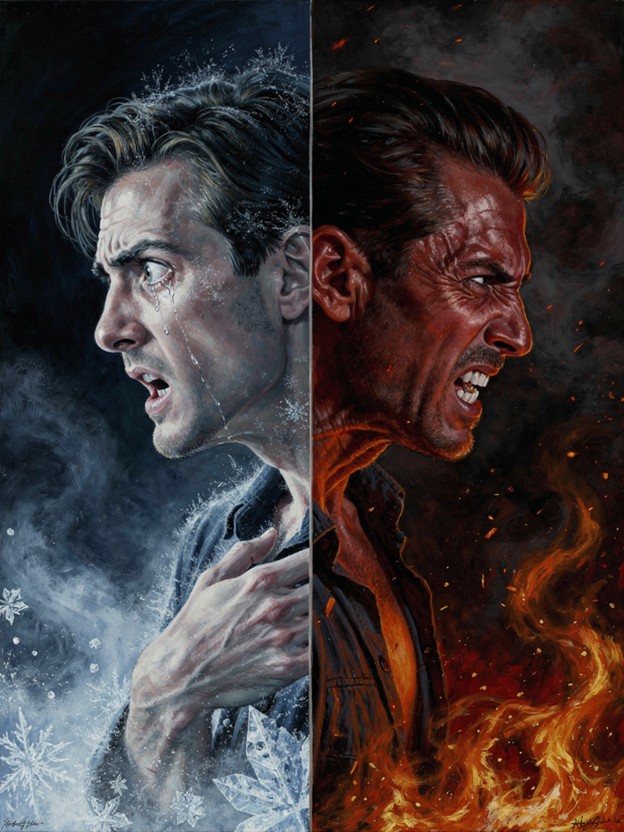
I wasn’t diagnosed. I’m still not. But a few months ago, a friend, herself recently diagnosed, late in life, mentioned the term almost in passing. And something clicked into place with the particular violence of a truth you’ve been carrying for decades without a name for it.
Nobody told me what rejection dysphoria was, and that it was even a thing.
Not my teachers. Not my therapists. Not the well-meaning adults who watched me spiral after a friend stopped calling and offered the timeless wisdom: “You’re too sensitive.”
It’s not sadness. It’s not insecurity. It’s not even, technically, an emotion. Not “they might be busy.” Not “that was probably nothing.”
We are in danger.
The reaction arrives before the reasoning. Which is why every piece of advice that starts with “just remind yourself…” lands with such spectacular uselessness. You’re not reacting to what happened. You’re reacting to what your brain decided it meant, and that decision was made without you.
The conscious you.
For me, the pattern had a face. Several of them, actually.
Childhood friendships that ended without explanation. No fight, no falling out, just a slow fade that I, with the pattern-seeking precision of a brain that never quite fit the standard mold, turned into evidence.
Evidence of something fundamentally wrong with me. Something broken in a way that was uniquely, specifically mine.
The world seemed to confirm it. Family dynamics confirmed it. The narrative wrote itself, and I was both the author and the subject.
- ADHD brains have differences in emotional regulation circuits, making rejection-related emotions much harder to control.
- People with ADHD may be oversensitive to rejection cues but desensitized to positive social feedback due to neural wiring differences.
- Years of receiving criticism (being called “lazy” or “careless”) can create heightened alertness to rejection.
So I did what a lot of us do: I built workarounds.
Cold calling? Had to be framed as a job. A duty. An act of service to someone else, never about me, never personal, never something that could be rejected in the way that actually mattered.
Warm calling? Same architecture. I needed the emotional distance of a role to step into, or the whole thing would short-circuit before I dialed.
Then an English friend, someone who’d done door-to-door sales across Australia, which is either brave or insane depending on your perspective, shared something that sounded, frankly, a little woo.
Before he knocked, he sent love.
Not metaphorically. Actively. He’d look at the neighborhood on a map and just… extend warmth toward it. Then, driving in, he’d visualize moving through the streets with genuine goodwill. No agenda. No armor. Just love as an operating state.
I tried it because I was desperate enough to try anything.
I drove to the neighborhood. I looked at the map. I did the thing that felt slightly absurd. And I knocked on the first door in what I can only describe as a superstate, not confidence exactly, but something warmer and less brittle than confidence. Something that didn’t need the door to open a certain way to remain intact.
I got a mortgage negotiation deal out of that first set of doors.
Who’d have guessed.
Here’s what I’ve come to understand, sitting with all of this:
The Hunter Child who couldn’t sit still in a classroom wasn’t broken, he was mis-calibrated for the environment. The visual learner drowning in a symbolic world wasn’t less intelligent, she was brilliant in a language the system didn’t speak.
And the person whose nervous system treats a delayed reply like a five-alarm fire?
Not dramatic. Not weak. Not uniquely, specifically broken.
Wired for a threat-detection sensitivity that, in another context, in another era, might have been the thing that kept everyone alive.
The mis-calibration isn’t a character flaw. It’s a protection system running the wrong software for the current conditions.
And protection, when it’s mis-calibrated, is indistinguishable from pain.
The love-state trick worked not because it was magic, but because it changed the input.
My brain was scanning for rejection before I knocked. The love-state gave it something else to do, something expansive enough that the threat-detection circuitry didn’t have room to run its usual loop.
It wasn’t really a mindset hack. It was a nervous system redirect.
And that distinction, between coping with a reaction and actually changing what triggers it, is where everything starts to shift.
I didn’t need to be diagnosed to benefit from understanding how I’m wired.
I just needed someone to say: this is a thing, it has a name, and you were never as broken as the evidence suggested.
Maybe that’s what this is for you, too.
The work isn’t about becoming less sensitive. It’s about understanding what your system is actually protecting, and giving it better information to work with. The superstate embodies information.
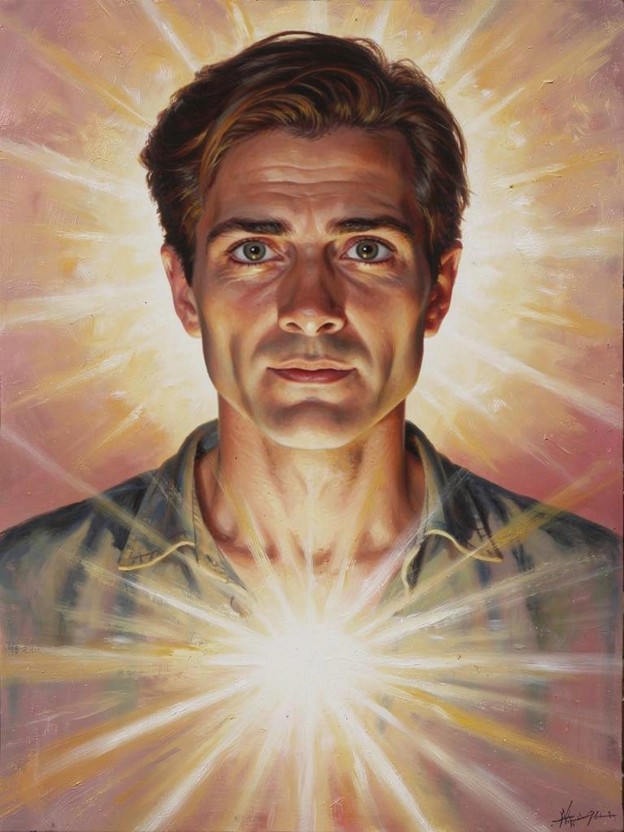
I am the blessing.
And so are you.